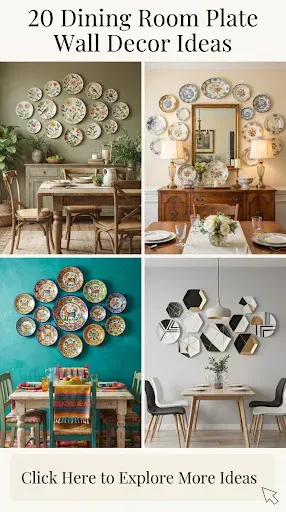
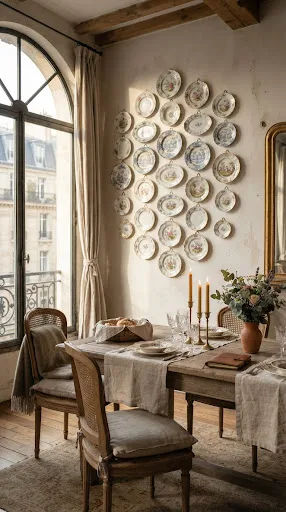
1. The Parisian Flea Market Gallery
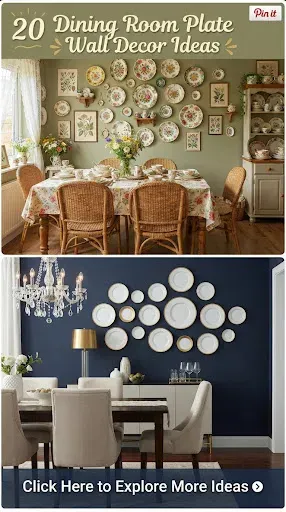
There is an undeniable magic in the lived-in elegance of a French apartment, where history and modern life coexist effortlessly. Bringing the Parisian flea market aesthetic to your dining room wall requires an eye for vintage charm, subtle imperfections, and timeless craftsmanship. Instead of searching for matching sets, this design philosophy thrives on curating an eclectic mix of porcelain sourced from different eras, regions, and makers. Think delicate hand-painted floral motifs from Limoges, faint gilding worn by decades of dinner parties, and soft pastel glazes that catch the evening candlelight.
To successfully execute a Parisian flea market plate wall, start with a hero piece—perhaps an oversized, ornate platter with a classic blue-and-white toile design or a hand-painted botanical illustration. Surround this anchor with smaller, asymmetrical plates that echo its color palette without copying it directly. Mix mismatched shapes: oval serving dishes, scalloped-edge dessert plates, and octagonal saucers. The key to keeping this look curated rather than chaotic is a cohesive color thread, such as washed cobalt, soft rose, cream, and tarnished gold leaf. Hang them using invisible adhesive hangers so the plates appear to float effortlessly against a backdrop of muted plaster, olive green, or warm bone-white walls.
Lighting plays a pivotal role in showcasing this vintage collection. Position a dimmable brass wall sconce nearby to cast a soft, romantic glow across the glazed surfaces, highlighting the subtle crazing and delicate raised details of the antique ceramic. Pair this wall display with a weathered oak dining table, linen runners, and tapered candles in mismatched brass holders to complete the feeling of a quiet, sun-drenched bistro in the heart of Le Marais.
2. Modernist Monochrome Radial Arrangement
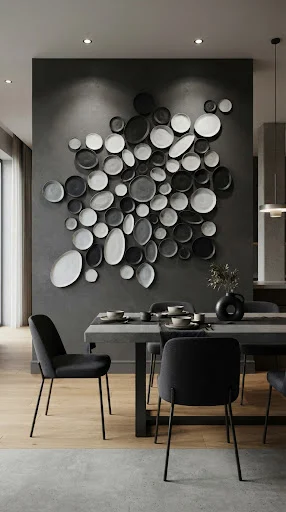
For those who lean toward contemporary minimalism yet crave texture and depth, a modern monochrome plate wall offers a striking visual statement. This concept strip away busy patterns and colorful glazes, focusing purely on form, silhouette, light, and shadow. By selecting ceramic plates in varying shades of matte white, charcoal, slate grey, and jet black, you turn a traditional dining room accent into a sophisticated piece of installation art.
The layout for a modernist arrangement benefits greatly from precision. Consider a radial or bursting grid layout, where the plates expand outward from a tight central cluster into a loose, dynamic formation across the wall. Use plates with flat profiles, sharp rim details, and unglazed stoneware finishes to emphasize raw tactile quality. Interspersing glossy black plates among chalky white ones creates a high-contrast visual rhythm that catches both daylight and dramatic evening dining lights.
This design style pairs seamlessly with a sleek concrete, glass, or blackened steel dining table. Keep the surrounding decor understated—perhaps a sculptural vase with a single dried botanical branch—to allow the geometry and contrast of the plate installation to anchor the dining room. It proves that ceramic art does not need bright colors to command attention; quiet contrast and deliberate spatial composition can be far more powerful.
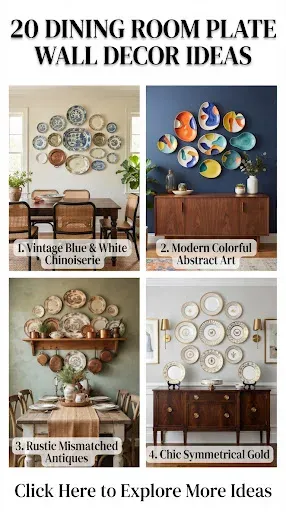
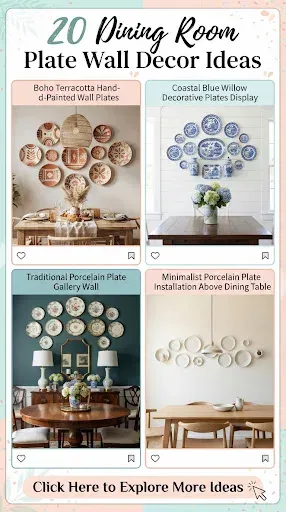
3. Blue and White Delftware Constellation
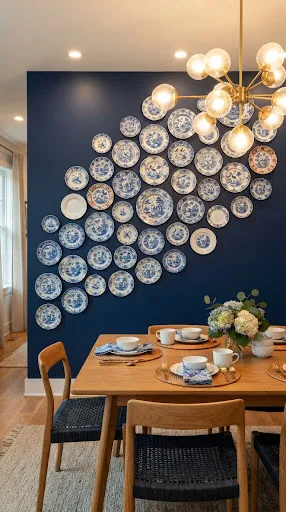
The timeless pairing of deep cobalt blue and crisp porcelain white has captivated interior enthusiasts for centuries. From Dutch Delftware and Chinese export porcelain to English transferware, blue-and-white ceramics possess an enduring, cross-cultural appeal that elevates any dining space. Rather than arranging these iconic plates in a rigid, traditional grid, transform them into an artistic “constellation” that dances organically across your feature wall.
Begin by gathering a diverse assortment of blue-and-white plates in various sizes and pattern scales. Mix intricate landscape scenes with bold geometric borders, abstract brushstrokes, and delicate chinoiserie florals. The beauty of a constellation arrangement lies in its movement; allow the plates to curve upward from above a sideboard, sweeping across the dining room wall like a river of indigo porcelain. Place larger dinner plates near the base of the arrangement to ground the design, letting smaller saucers and bread plates drift toward the outer edges.
A crisp, cool-toned backdrop—such as navy blue, slate blue, or stark white—will make the indigo glaze pop with astonishing clarity. To balance the classic nature of transferware with modern sensibilities, pair the plate wall with contemporary mid-century chairs, a simple light wood dining table, and crisp brass hardware. The result is a dining room that feels rich with heritage yet completely fresh and tailored for modern entertaining.
4. Earthy Terracotta and Unglazed Clay Medley
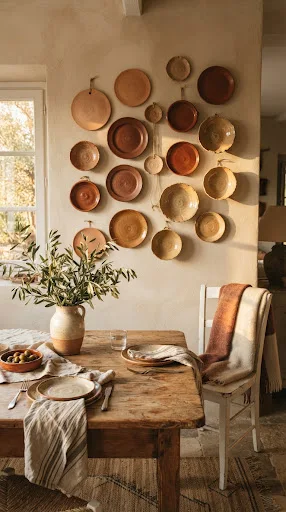
Bring the warmth, rich textures, and sun-baked charm of Mediterranean and Southwestern landscapes into your dining room with an earthy terracotta plate wall. This approach shifts the focus away from delicate porcelain toward tactile, artisan-crafted stoneware, unglazed clay discs, and hand-thrown ceramic platters. The natural variation in clay bodies—ranging from deep rust and burnt sienna to sandy ochre and warm beige—creates an inviting, grounded atmosphere ideal for cozy family gatherings.
To build a compelling terracotta medley, source handcrafted plates with organic, imperfect edges, visible wheel marks, and raw matte surfaces. Combine solid unglazed pieces with plates featuring subtle dip-glazes in cream, terracotta, or sage green. Incorporating different depths—such as shallow bowls alongside flat tapas plates—adds a compelling three-dimensional element to the wall that catches ambient light from every angle.
This style shines brightest when mounted on textured walls, such as limewash, warm plaster, or exposed brick. Enhance the rustic, artisanal feel by pairing the arrangement with a reclaimed wood dining table, woven rattan pendant lights, and linen drapery. The end result is a dining sanctuary that feels intimately connected to the earth, echoing the timeless hospitality of a Tuscan villa or a Santa Fe retreat.
5. Botanical Pressed-Herbarium Ceramics
Nurture a serene connection with nature by installing a dining room plate wall dedicated to botanical motifs. Inspired by Victorian herbarium collections and vintage botanical illustrations, this concept utilizes ceramic plates featuring intricate leaf imprints, pressed floral motifs, and delicate hand-painted greenery. It transforms the dining room into a tranquil, garden-inspired retreat where the outdoors seamlessly weaves into your interior decor.
Look for plates that showcase specific botanical themes—ferns, eucalyptus, wild herbs, or native garden blooms. A particularly charming variation involves using plates made with real leaf impressions pressed directly into wet clay before firing, leaving behind detailed veins and subtle relief textures. Arrange these plates in a balanced, semi-symmetrical grid or a flowing vertical cascade that mimics the natural growth of climbing vines.
To heighten the organic ambiance, pair the botanical ceramics with soft sage green, warm olive, or creamy vanilla wall colors. Decorate the surrounding dining space with potted indoor plants, trailing ivy, and natural timber furniture. This style works exceptionally well in sunlit dining nooks and breakfast corners, where natural daylight accentuates the delicate leaf details and fresh, invigorating color palette.
6. Metallic Foil and Gilded Edge Splendor
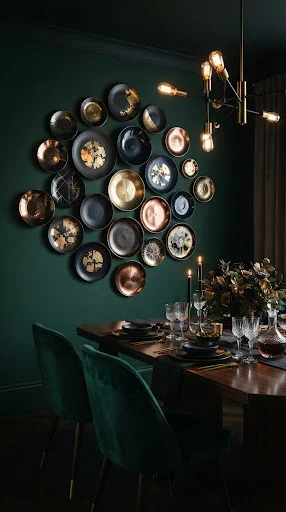
If your dining room aesthetic leans toward glamorous, moody, or opulent, a metallic and gilded plate wall will introduce sophisticated shine and dramatic light reflection. Metallic accents catch even the softest flicker of candlelight, making them a breathtaking choice for evening dinner parties and formal dining spaces. This design focuses on plates featuring solid metallic glazes, gold leaf overlays, platinum rims, and shimmering copper detailing.
Creating a balanced metallic installation requires careful mixing of tones and finishes. Combine bright polished gold with brushed brass, antique bronze, and soft rose gold plates to create a multidimensional display. To prevent the look from feeling overly heavy or ostentatious, mix full metallic plates with translucent porcelain pieces that feature only delicate gilded edges or subtle geometric foil stamp patterns.
A deep, dramatic wall color—such as charcoal, emerald green, deep plum, or matte black—provides the ultimate backdrop for gilded ceramics, making the metallic tones glow with exceptional brilliance. Modern crystal chandeliers or sleek globe pendants positioned nearby will bounce light off the ceramic surfaces, transforming your dining room wall into a dazzling, artful installation.
7. Sculptural 3D and Embossed Ceramic Discs
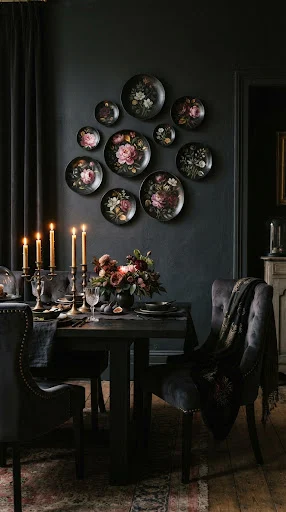
Move beyond flat, traditional wall art by treating your dining room plate display as a relief sculpture. Sculptural 3D plates feature raised geometric patterns, deep fluting, carved floral reliefs, and tactile wave textures that rise off the wall. This dynamic approach turns light and shadow into active design elements, changing the appearance of your display as the sun moves throughout the day.
When selecting sculptural plates, focus heavily on depth and tactile interest rather than complex color patterns. A monochromatic palette—such as all-white, warm ivory, or deep charcoal—works best here, as multi-colored patterns can obscure the intricate 3D carvings. Group plates with contrasting relief designs together: pair a deep lotus-blossom embossed plate alongside a sharp, geometric diamond-carved saucer and a fluted, wavy-edged dish.
Mounting these sculptural pieces on a wall with subtle directional lighting—such as adjustable track spotlights or ceiling-mounted accent lights—will cast dramatic, soft shadows across the raised textures. Paired with minimalist furniture and clean-lined architectural details, a 3D ceramic installation delivers a museum-worthy focal point that feels modern, intellectual, and deeply artistic.
8. Oversized Statement Platter Centerpiece
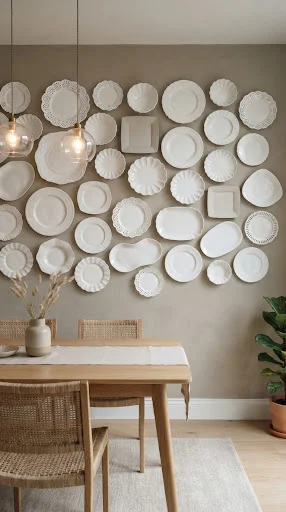
Sometimes, the most impactful design statement comes from a single, extraordinary object rather than a large collection of smaller items. An oversized statement platter serves as a magnificent anchor point for a dining room, pulling the eye in and defining the entire room’s color story and mood. This minimalist yet grand approach is ideal for smaller dining rooms where a dense plate wall might feel visually cluttered, or for minimalist spaces that demand a focal point with maximum scale.
Search for a large charger plate or serving platter measuring at least 20 to 30 inches in diameter. The platter should possess remarkable artistic value—such as a hand-thrown ceramic piece with a dramatic glaze drip, a hand-painted abstract composition, or a historic hand-engraved brass or ceramic heirloom. Mount this central masterpiece prominently above a credenza, buffet cabinet, or directly along the central axis of the dining table.
To frame the statement platter without overwhelming it, consider placing two sleek wall sconces on either side or framing the wall with elegant architectural picture frame molding. Keeping the surrounding space simple allows the scale, color depth, and craftsmanship of the singular piece to shine brightly, making a confident statement of refined taste.
9. Scalloped Edge and Pastel Cottagecore Display
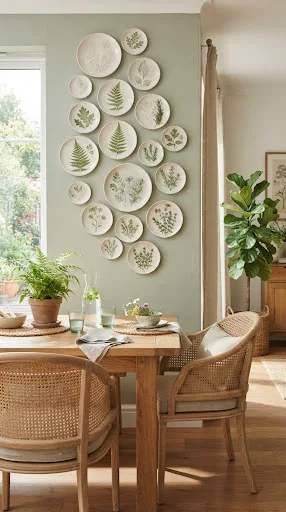
Embrace sweet nostalgia, lighthearted charm, and vintage romanticism with a plate wall inspired by the cottagecore movement. Defined by soft pastel tones, playful scalloped rims, delicate lace edges, and whimsical hand-painted motifs, this style turns any dining space into a cozy, welcoming sanctuary reminiscent of a sun-drenched countryside cottage.
To build a cottagecore plate wall, gather ceramics in a soft candy box palette: powder blue, mint green, pale buttercream yellow, blush pink, and lilac. Mix smooth glazed surfaces with plates featuring pierced lace borders, ruffle details, and fine lattice rims. The arrangement should feel relaxed, fluid, and whimsical, gently swirling around a window, floating above a vintage pine sideboard, or framing a archway.
Enhance the sweet aesthetic by painting the accent wall in a soft warm white or lining it with subtle floral wallpaper. Pair the display with natural pine furniture, linen tablecloths, fresh wildflowers in stoneware jugs, and vintage slipcovered chairs. It is a design approach that celebrates warmth, comfort, and the charming imperfections of country life.
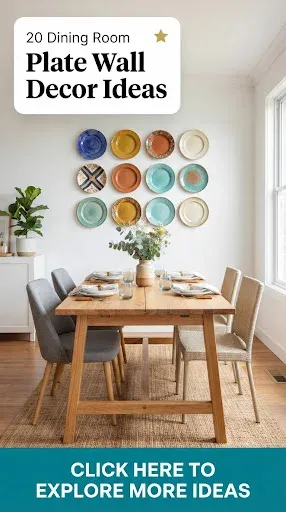
10. Abstract Splatter and Hand-Painted Art Plates
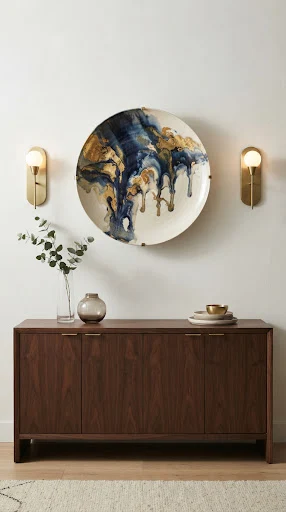
Transform your dining room into a contemporary gallery by framing plates as canvases for bold, abstract fine art. Moving far away from traditional floral motifs and vintage patterns, this style highlights modern ceramic artists who use plates to explore painterly brushstrokes, Jackson Pollock-inspired splatter techniques, color-blocking, and fluid ink swirls.
Curate a collection of modern art plates that feature expressive glaze applications. Look for high-contrast combinations, such as cobalt splatter on matte stoneware, abstract terracotta brushstrokes on bone white, or moody watercolor-like glaze drips. Because each plate acts as a standalone painting, allow generous spacing between them on the wall to give each piece breathing room.
Arrange these artistic plates in an dynamic layout above a sleek, mid-century modern credenza or a contemporary glass-top dining table. Frame the collection with simple, linear furniture, bold modern lighting, and minimalist floor vases. This approach proves that plates are not merely utilitarian tableware—they are vibrant, dynamic surfaces for contemporary artistic expression.
11. Mid-Century Modern Geometric Plates
Channel the optimistic, retro-chic energy of the 1950s and 60s with a mid-century modern plate wall. Celebrated for iconic atomic shapes, clean graphic patterns, and warm, retro color palettes, mid-century ceramics add instant retro personality and vintage flair to a contemporary or retro-inspired dining space.
Seek out vintage or reproduction plates featuring iconic mid-century graphics: starbursts, atomic orbits, stylized leaves, overlapping geometric circles, and abstract kidney shapes. The ideal color spectrum includes warm mustard yellow, burnt orange, avocado green, teal, and dusty charcoal brown. Instead of standard round plates, incorporate triangular, square, and elongated oval dish shapes characteristic of mid-century design.
Mount these graphic gems on a warm walnut wood-paneled wall or a backdrop painted in a soft muted teal or retro olive. Pair the installation with iconic mid-century furniture—such as a sleek teak dining table, molded plywood dining chairs, and a sputnik brass chandelier. The result is a fun, nostalgic, and visually stimulating dining room that pays tribute to one of the most beloved eras of interior design.
12. Japandi Minimalist Wabi-Sabi Ceramics
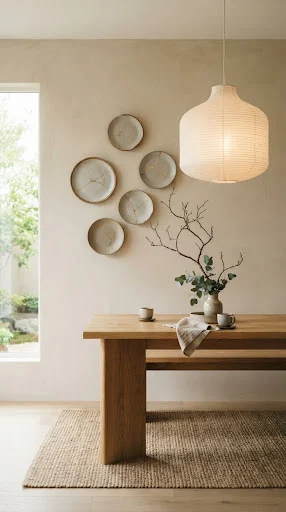
Where Japanese rustic minimalism meets Scandinavian functionality, Japandi style emerges. A Japandi-inspired plate wall centers around the ancient Japanese philosophy of *wabi-sabi*—finding deep beauty in imperfection, simplicity, and natural aging. This design avoids high-gloss finishes and bright colors, embracing raw textures, soft earth tones, and tranquil balance instead.
Curate a minimalist collection of handmade stoneware plates crafted with natural clay slubbing, uneven hand-molded edges, and subtle matte glazes in shades of oatmeal, smoke grey, charcoal, chalk white, and muted moss green. Plates featuring *Kintsugi*—the traditional Japanese art of repairing broken pottery with liquid gold lacquer—make breathtaking focal points that celebrate resilience and history.
Space the plates deliberately on a limewash or smooth warm-beige wall, allowing the quiet empty space around them to feel just as important as the ceramics themselves. Pair this peaceful installation with low-profile light oak furniture, paper lantern pendant lights, simple woven linen textiles, and slender bamboo shoots in ceramic vessels. The atmosphere created is quiet, serene, and deeply meditative.
13. Mediterranean Talavera and Majolica Burst
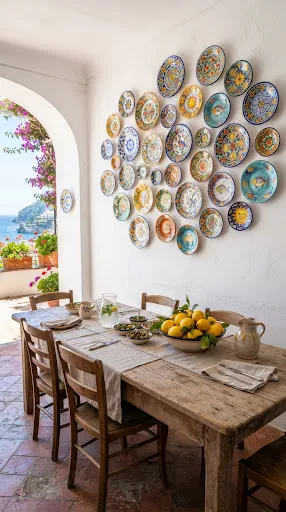
Infuse your dining space with the radiant warmth, rich cultural tradition, and vibrant color of the Mediterranean, Mexico, and Southern Europe. Talavera, Majolica, and Iberian tin-glazed ceramics are world-renowned for their bold hand-painted patterns, rich cobalt and amber glazes, and joyful, celebratory aesthetic.
Build a high-energy plate wall using an assortment of authentic Talavera or Italian Majolica plates brimming with intricate geometric bands, sunburst patterns, fruit motifs, and stylized floral vines. The color palette should be bright and sun-drenched: cobalt blue, vivid marigold, warm terracotta, lemon yellow, and emerald green. Arrange the plates in an energetic circular or sprawling diamond pattern to maximize visual punch.
A crisp white plaster wall or a soft terracotta-washed surface offers the ideal background to make these rich, glossy glazes sing. Complete the Mediterranean mood with a long rustic wooden dining table, wrought-iron light fixtures, terra-cotta floor tiles, and abundant bowls of fresh lemons and citrus branches. It is a festive, welcoming look that feels like a perpetual summer holiday.
14. Symmetrical Grid of Antique English Willow Pattern
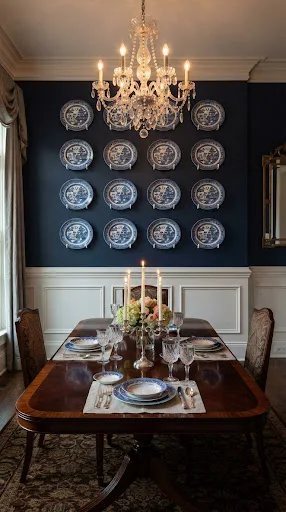
For lovers of classic architecture, tailored tailoring, and timeless traditional style, a strict symmetrical grid of blue-and-white English Willow or transferware plates brings refined structure and elegance to the dining room. Unlike loose, organic arrangements, a grid layout relies on mathematical precision, clean alignment, and uniform repeating shapes to establish order and architectural permanence.
Select a uniform set of plates—such as twelve or sixteen identical or closely matched English transferware dinner plates featuring classic Willow, landscape, or botanical prints. Measure carefully and install them using precision leveling so that the spacing between every single plate is perfectly identical, both horizontally and vertically, forming a clean rectangular or square block on the wall.
This tailored presentation works remarkably well inside formal dining rooms with traditional wainscoting, crown molding, or deep dark wall paint like forest green, rich navy, or charcoal plum. Pair the grid display with a polished mahogany or walnut dining table, upholstered dining chairs with nailhead trim, and a classic crystal chandelier to create an atmosphere of dignified, timeless sophistication.
15. The Layered Plate and Woven Basket Wall
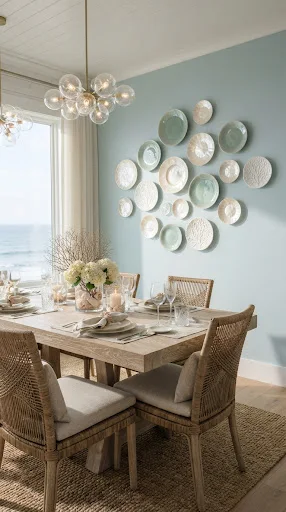
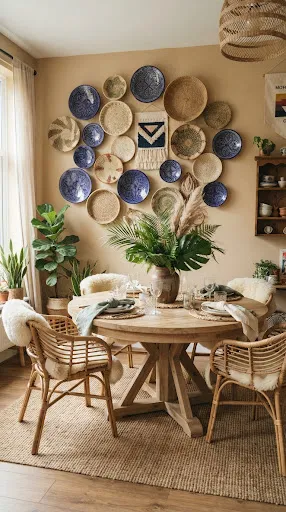
Break up the uniform coldness of glazed ceramic by mixing your plate collection with natural woven textures. Combining ceramic plates with hand-woven sweetgrass, raffia, seagrass, and rattan wall baskets creates a rich, bohemian, global-inspired tapestry that adds warm texture, depth, and tactile interest to the dining room.
To master this layered look, alternate between smooth, glossy ceramic plates and textured woven discs. Allow the woven baskets to physically layer slightly under or over the ceramic plates to create depth. Mix pattern scales—pair a high-gloss patterned ceramic saucer with a large, chunky woven wall tray. Stick to an organic color scheme of warm cream, natural straw, tan, chocolate brown, and washed indigo.
Mount this textured collection against a warm sandy-tone or crisp white backdrop. Complement the installation with natural fiber rugs (such as jute or sisal), light wood dining furniture, and trailing indoor plants. This warm, global aesthetic invites guests to relax and enjoy a long, unhurried meal surrounded by organic craftsmanship.
16. Moody Dark Floral Dramatics
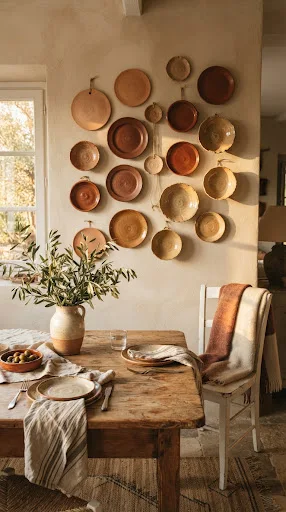
Step into the seductive, moody world of Dutch Masters light and shadow with a plate wall inspired by dark floral paintings. This romantic design trend features ceramic plates adorned with lush, oversized blooms—peonies, roses, tulips, and anemones—painted against deep black, navy, or moody plum backgrounds.
Curate plates that evoke dramatic chiaroscuro lighting, where bright, creamy floral petals emerge dramatically out of velvety dark glaze fields. To create a captivating narrative, mix circular plates with oval platters, ensuring that the dark background of the ceramics blends subtly into the wall color behind them, making the painted flowers look as though they are floating in space.
Paint the accent wall in a deep matte charcoal, midnight blue, or dark forest green to amplify the theatrical drama. Accentuate the space with rich velvet upholstered chairs, a dark stained oak table, dim, romantic candlelight, and vintage brass dinnerware. This aesthetic creates an intoxicating, intimate atmosphere perfect for late-night dinner parties and deep conversation.
17. Monochrome White Textured Gallery
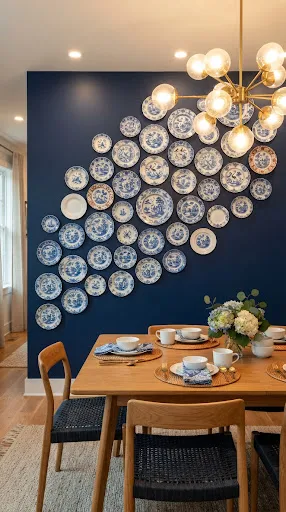
If you want to create visual interest without introducing multi-colored chaos into a clean, modern home, a monochromatic all-white plate gallery offers the ultimate solution. This design strategy relies entirely on shape variations, rim profiles, raised moldings, and light reflections to create a sophisticated, quiet visual masterpiece.
Collect an assortment of all-white plates, spanning pure brilliant white, cream, ivory, and soft alabaster tones. Focus heavily on variety in texture and shape: seek out pierced lace edge plates, white beaded charger rims, fluted porcelain saucers, vintage ironstone platters, and modern square matte dishes. When grouped together, the subtle variations in white glazes and rim shadows create a rich, subtle tapestry.
Mount these white plates on a soft grey, warm greige, or contrasting dark charcoal wall to allow the silhouettes to stand out crisp and sharp. Pair with Scandinavian-inspired furniture, clean linen napery, and understated glass lighting fixtures. It is a timeless, calm approach that suits both traditional farmhouse dining rooms and contemporary urban lofts.
18. Eclectic Storybook and Illustrated Narrative Plates
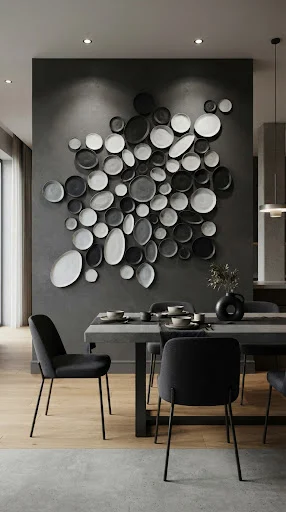
Infuse your dining space with literary magic, charm, and conversation-starting eccentricity by creating a plate wall made of whimsical illustrated ceramics. Featuring whimsical animal portraits, fairytale scenes, vintage maps, line drawings, or quirky pop-art motifs, this style turns your dining room wall into an engaging storybook.
Look for ceramics from quirky designers, vintage flea markets, or independent illustrators that feature detailed line drawings, surreal character portraits (like dressed-up animals), or hand-scrawled poetic quotes. Arrange them in a loose, playful layout that invites guests to step up close, inspect the details, and discover the hidden stories on every plate.
This whimsical approach thrives in casual dining spaces, breakfast rooms, or creative bohemian homes. Keep the surrounding decor friendly and accessible with colorful dining chairs, painted wooden tables, and eclectic light fixtures. It guarantees that dinner conversation will never hit a lull, with dynamic artwork offering endless inspiration right at eye level.
19. Archway and Architectural Framing Display
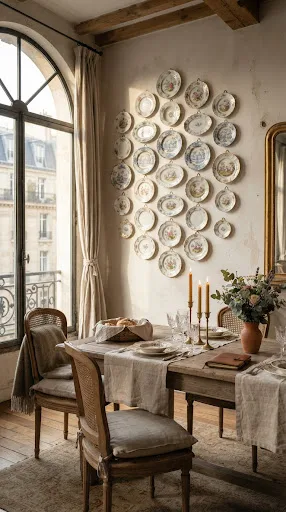
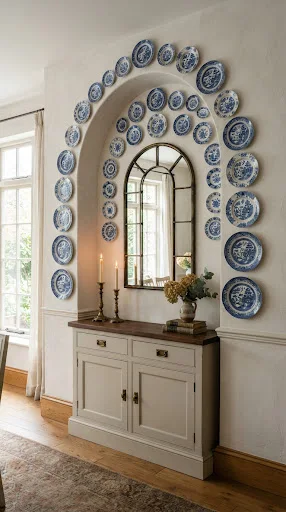
Instead of arranging plates in a simple square block in the middle of a blank wall, use your ceramic collection to highlight and frame the existing architectural features of your dining room. Using plates to contour door frames, windows, arched alcoves, wall mirrors, or built-in china cabinets adds bespoke architectural drama to the home.
Carefully measure the curvature of your architectural element—such as a curved archway leading into the dining room or a tall central mirror above the buffet. Curve your plate arrangement along that exact outline, creating a decorative ceramic frame that accentuates the structure of the room. Use plates that decrease in size as they trace upward toward the top of the arch to draw the eye skyward and exaggerate ceiling height.
This custom tailored method turns awkward wall spaces and empty corners into deliberate design features. Whether using matching porcelain sets or eclectic vintage finds, architectural framing elevates the built-in feel of your dining room, making the decor feel completely integrated with the structure of your house.
20. Coastal Shoreline Shell and Coral Glazes
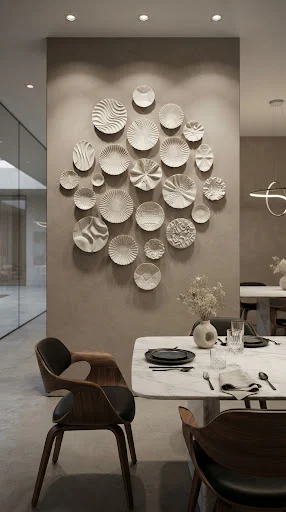
Capture the breezy, soothing spirit of the ocean with a dining room plate wall inspired by coastal shorelines. Moving far away from kitschy beach motifs, this refined coastal concept focuses on subtle sea-inspired textures: iridescence, mother-of-pearl lusters, cracked celadon sea-glass glazes, and delicate wave-like embossed patterns.
Gather plates with glazes that evoke the ocean: soft aquamarine, seafoam green, misty grey, sand beige, and deep sea blue. Look for pieces with crackle glazes that mimic salt crystals, shallow bowl shapes resembling clam shells, or subtle embossed patterns that echo sea fan corals and rippling water. Mix in a few lustrous mother-of-pearl or shell-inlaid decorative discs to catch the light like sunlight reflecting off sea water.
Mount this serene collection against a backdrop of soft sea-mist blue or clean, airy white. Pair with light-bleached oak dining furniture, natural linen curtains, and subtle brass or rattan accents. The resulting dining space feels airy, refreshing, and filled with the calming, timeless beauty of the coastal tide.