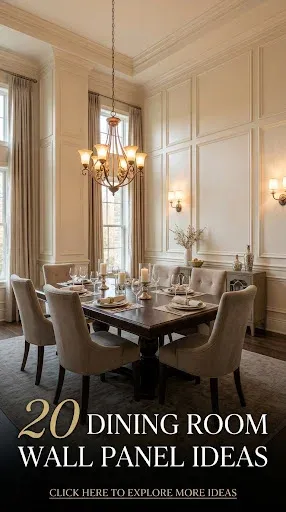
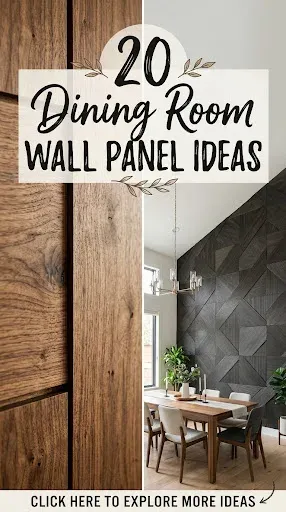
1. Venetian Plaster Paneling with Recessed Ambient Strip Lighting

Venetian plaster brings a tactile, old-world Mediterranean luxury directly into modern interior design. When applied as a structured wall paneling system, it introduces a subtle texture that catches light in breathtaking ways. By embedding ultra-thin LED strip lighting within the recessed reveals between the plaster panels, you create an architectural feature that glows from within. The soft, diffused illumination accentuates the hand-troweled movement of the plaster, making the wall feel less like a divider and more like an art installation. This approach works exceptionally well in dining rooms where evening entertaining demands a cozy, moody atmosphere without the harsh glare of overhead fixtures.
2. Floor-to-Ceiling Fluted Dark Walnut Slats

Verticality meets rich, organic warmth in floor-to-ceiling fluted dark walnut slats. This design trend leverages rhythm and repetition to visually heighten the dining room while introducing profound natural depth. The deep, chocolate tones of raw or satin-finished walnut ground the dining space, creating a sophisticated backdrop for metallic dining tables or plush upholstered seating. Beyond its visual charm, this paneling style acts as a subtle acoustic baffle, dampening echoes and creating an intimate conversational soundscape during dinner parties. The narrow channels between the rounded wooden flutes catch shadows, generating a dynamic play of light that shifts naturally throughout the day.
3. Geometric Asymmetrical Board and Batten

Reinventing a classic architectural technique, geometric asymmetrical board and batten breaks away from predictable, grid-like patterns to offer a bold contemporary statement. By arranging crisp wooden battens at unexpected angles—diagonals, overlapping diamonds, or off-center intersections—the dining room wall transforms into a geometric tapestry. Painted in a single, matte hue such as rich terracotta or dusty olive, the shadows created by the raised boards take center stage. This technique brings an energetic, bespoke character to modern homes while honoring the structural heritage of traditional woodworking, offering a perfect focal point behind a sleek dining credenza.
4. Antique Mirror Paneled Feature Wall with Brass Molding

For dining spaces that lack natural sunlight or feel somewhat confined, an antique mirror paneled wall framed with delicate brass molding offers an ethereal solution. Unlike stark modern mirrors, antiqued glass features distressing, foxing, and warm metallic patina that softens reflections, preventing the room from feeling clinical. The brass molding provides structural definition, breaking the mirror into elegant grid proportions reminiscent of a classic Parisian apartment. As candlelight flickers across the room, the distressed mirror catches and multiplies the glow, infusing the entire space with a moody, romantic, and endlessly spacious aesthetic perfect for long dinner conversations.
5. Inset Velvet Fabric Upholstered Wall Panels

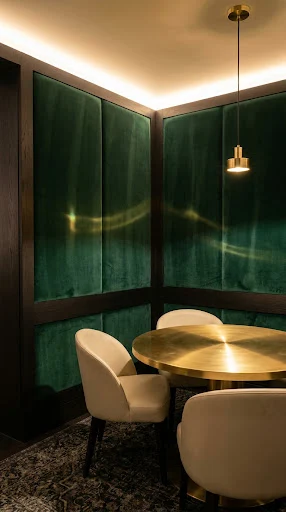
Luxurious, unexpected, and immensely cozy, inset velvet fabric panels transform the dining room into an opulent haven. Framed by crisp painted trim or natural wood casing, these padded fabric sections absorb sound perfectly while adding physical softness to a room dominated by hard surfaces like wood tables and glass barware. Choosing jewel tones like sapphire blue, emerald green, or rich mulberry creates a sense of cocoon-like comfort. The sheen of the velvet catches room lighting differently depending on the direction of the pile, offering a rich visual texture that invites guests to linger at the table long after dessert is cleared.
6. Japanese Shoji-Inspired Light Oak Grid Paneling
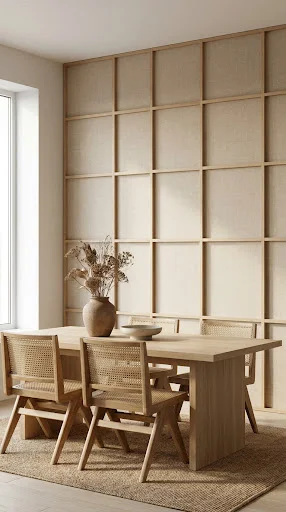
Embracing the serene simplicity of Japandi design, Shoji-inspired light oak grid paneling introduces structured minimalism to the dining space. Utilizing pale woods such as white oak, ash, or maple, thin vertical and horizontal mullions create a balanced, harmonious grid. Instead of traditional paper inserts, modern adaptations often use textured linen, matte cream acoustic felt, or back-lit frosted glass within the grid openings. The result is a clean, tranquil vertical surface that instills a sense of order, lightness, and modern organic beauty, making it an ideal choice for minimalist interiors or compact urban dining nooks.
7. Floor-to-Ceiling Oversized Shiplap in Deep Charcoal

Moving far beyond traditional rustic farmhouse aesthetics, oversized horizontal or vertical shiplap painted in deep charcoal or midnight black delivers dramatic modern elegance. Utilizing wider planks—around eight to twelve inches—reduces visual clutter while emphasizing clean, horizontal lines. The dark, saturated paint color absorbs light, creating an expansive visual field that makes colorful artwork or metallic wall sconces pop dramatically. The sharp reveal lines between the wide boards add structural precision, giving the dining room an elevated, contemporary lodge feel that is both bold and surprisingly timeless.
8. Reclaimed Wine Barrel Slat Paneling

Infuse your dining room with rich viticultural history and authentic rustic charm by installing paneling crafted from reclaimed wine barrel slats. Each wood plank bears unique staining from years of holding red wine, featuring deep burgundy, oaky brown, and charcoal tones alongside original iron hoop markings. Arranged in a staggered brick pattern or running horizontally across a primary feature wall, these panels tell a story of craft and time. The inherent variations in wood grain, curve, and tone bring incredible warmth, making it a natural centerpiece for spaces dedicated to good food, fine wine, and passionate gathering.
9. Scalloped and Curved MDF Paneling in Powder Soft Pastels

Soft curves and organic silhouettes continue to dominate interior design, and scalloped wall paneling offers a playful yet refined way to incorporate this trend into the dining room. Fabricated from precision-milled MDF, vertical scalloped panels feature undulating, wave-like surfaces that soften the hard edges of dining tables and cabinetry. When painted in powder-soft pastels—such as dusty rose, sage green, or muted butter yellow—the panels interact delicately with natural light, creating soft, cascading shadows. This whimsical wall treatment brings a sense of modern romance and gentle architectural curiosity to contemporary dining spaces.
10. Polished Concrete Panels with Exposed Industrial Rivets

For loft apartments and modern urban homes, polished concrete wall panels with exposed architectural rivets deliver an edgy, industrial sophistication. These lightweight pre-cast panels offer all the raw, tactile appeal of poured concrete without the structural weight. The subtle variations in gray tones, air bubble pockmarks, and smooth polished finish create a rich, tactile surface. The exposed brass or dark steel rivets marking the corners of each panel add precise detailing, establishing a striking contrast when paired with soft leather dining chairs, warm timber tables, and low-slung modern pendant lights.
11. Raised Picture Frame Molding with High-Gloss Lacquer Finish

Classic European architecture meets high-fashion interior design through the combination of raised picture frame molding and a ultra-high-gloss lacquer finish. By applying delicate rectangular picture moldings to the wall and coating the entire surface—including baseboards and crown trim—in a reflective glass-like lacquer, the room becomes a luminous jewel box. Dark colors like deep plum, forest green, or cobalt blue dramatic transform under glossy coats, reflecting light source fixtures, dining candles, and ambient city lights. The traditional moldings ground the space in classic elegance, while the high-shine finish injects undeniable modern drama.
12. Raw Cork Mosaic Tile Panels with Metallic Accents

Sustainable, texturally captivating, and acoustically brilliant, raw cork paneling has undergone a stunning modern transformation. Modern cork wall panels utilize organic cork bark fused with subtle metallic flecks—such as gold leaf, copper wire, or bronze dust—woven into geometric mosaic patterns. The rich, earthy brown tones and spongy texture of the natural cork bring organic warmth to the dining room, while the metallic elements catch light as guests move around the room. This eco-friendly design choice insulates the space against noise, ensuring intimate, clear conversations across the dining table.
13. Carved Teak Wood relief Panels with Botanical Patterns

Transform your dining space into a bespoke sanctuary with hand-carved teak wood relief panels featuring intricate botanical patterns. Drawing inspiration from tropical flora, flowing vines, and grand architectural screens, these panels bring extraordinary dimensional artistry to the wall. The warm, oily grain of teak wood offers long-lasting durability and a natural luster that ages gracefully over time. Installed as a central focus behind the host chairs or running along the main wall of the dining room, these carved reliefs create dramatic highlights and deep shadows, functioning simultaneously as structural wall treatment and fine art.
14. Terrazzo Composite Wall Panels with Bold Aggregate

Terrazzo has broken free from flooring and kitchen counters to become one of the most exciting choices for wall paneling. Large-format composite terrazzo panels featuring oversized marble chips, quartz inclusions, and glass fragments bring playful color and pattern to the dining environment. The smooth, polished stone surface reflects light while offering a seamless, hygienic, and incredibly durable wall finish. Choosing a terrazzo panel with a neutral matrix and bold, jewel-toned aggregate allows you to pull accent colors directly into your dining room chairs, tablecloths, and dinnerware choices.
15. Herringbone Patterned Hardwood Paneling

Bringing the timeless elegance of fine parquet flooring directly onto the vertical plane, herringbone patterned hardwood paneling adds dynamic movement to the dining room walls. Using narrow strips of oak, walnut, or smoked ash arranged in a V-shaped zig-zag pattern, this wall treatment creates a striking sense of directional flow. The alternating angle of the wood grain catches light differently on each side of the herringbone design, resulting in a rich, two-tone optical depth. It serves as an exquisite background for modern art, brass sconces, or minimalist dining furniture.
16. Modern Painted Tambour Panels with Integrated Floating Shelves
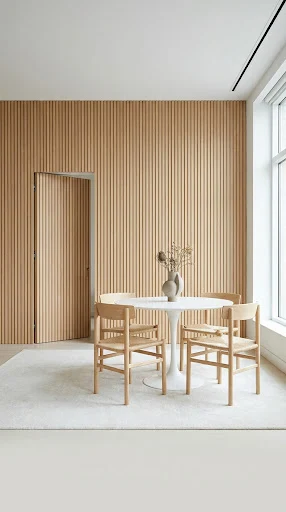
Tambour paneling—consisting of thin, flexible vertical wooden dowels attached to a flexible backing—offers a fine, tightly ribbed texture that breathes modern energy into dining spaces. When painted in a sophisticated monochrome shade like greige, warm terracotta, or soft eucalyptus, tambour walls create a soft, micro-textured backdrop. Integrating floating wooden shelves seamlessly into the tambour channels allows you to display curated ceramics, glassware, and trailing houseplants without disrupting the visual continuity of the wall, perfectly blending high utility with seamless design elegance.
17. Brushed Warm Copper Panel Inserts in Smoked Oak Frames

Infuse your dining room with moody, metallic opulence by combining brushed warm copper sheets set into dark smoked oak timber frames. The soft, brushed finish of the copper panels prevents harsh reflections, casting instead a warm, reddish-gold ambient glow across the room when lit by dim table candles or warm sconces. The dark, charcoal-brown tones of the surrounding smoked oak grids provide sharp architectural definition and structural contrast. This sophisticated combination brings an ultra-luxurious, speakeasy-inspired atmosphere into private dining spaces, turning every meal into a special occasion.
18. Vertical Slat Wall Paneling with Integrated Hidden Doors

Sleek, functional, and visually striking, continuous vertical slat wall paneling allows designers to conceal unsightly doors—such as those leading to kitchens, pantries, or powder rooms—completely within the wall structure. By maintaining an uninterrupted rhythm of vertical wood slats across the entire dining room expanse, doors are integrated seamlessly using flush hardware and hidden hinges. The resulting spatial uniformity gives the dining room a pristine, uncluttered appearance, directing all attention toward the center of the room: the table, lighting, and gathered company.
19. Slated Slate Stone Veneer Paneling with Organic Edge
Bring the raw, elemental beauty of natural rock formations inside with thin slate stone veneer panels. Utilizing real stone sliced paper-thin and backed with fiberglass, these flexible stone panels deliver the genuine texture, color variation, and tactile roughness of a natural quarry wall without requiring massive structural reinforcement. The dark charcoal, rusty iron, and deep green tones of natural slate provide a dramatic, dramatic background. Illuminating the stone from above with recessed grazing spotlights casts dramatic shadows across the rough organic texture, transforming the dining room into a moody, modern cave of luxury.
20. Two-Tone Horizontal Split Wainscoting with Modern Picture Rail

A fresh reinterpretation of classical wall proportion, two-tone horizontal split wainscoting brings balance and grounding to the dining room. The lower portion of the wall—typically the bottom third—is wrapped in traditional vertical tongue-and-groove or flat beadboard panels painted in a grounding dark shade like midnight navy or hunter green. The top portion features smooth plaster painted in a lighter, contrasting cream or soft gray tone, capped by a clean-lined modern picture rail. This horizontal division grounds the furniture in the room visually while allowing flexibility to display artwork or change wall decor above without disturbing the wall paneling below.