Grounding and organic, this style embraces the rich, baked earth tones of the desert southwest, bringing a warm, inviting rustic charm to living spaces.
- Materials Needed: Terracotta paint, burnt orange, mustard yellow, cream, raw umber, old credit card or plastic scraper.
- How to Make It:
- Cover the canvas in a warm cream wash.
- Pour dollops of terracotta, mustard, and burnt orange paint onto the surface.
- Use the edge of a plastic card to scrape and drag the paint into organic, overlapping geometric petal formations.
- Tips and Variations: Add subtle charcoal pencil sketches underneath the paint layers for an accidental, vintage blueprint aesthetic.
8. Watercolor Bleed Botanical Dreams
Embracing the unpredictable nature of water, this technique lets pigments bleed and merge organically, resulting in soft, fluid floral explosions.
- Materials Needed: High-flow fluid acrylics or liquid watercolors, heavy watercolor paper, spray bottle filled with water, and a round watercolor brush.
- How to Make It:
- Pre-wet your paper thoroughly with clean water using a spray bottle.
- Drop concentrated spots of magenta, violet, and deep indigo onto the wet paper.
- Tilt the paper in various directions, watching the colors bloom, bleed, and feather outward into soft, organic floral silhouettes.
- Tips and Variations: Sprinkle coarse table salt onto the wet paint; as it dries, the salt absorbs pigment, leaving behind stunning starry textures resembling pollen centers.
9. Monochromatic Charcoal & Cream Florals
Proving that color is entirely optional, this high-contrast piece uses only varying shades of black, gray, and cream to create dramatic, architectural floral statements.
- Materials Needed: Compressed willow charcoal, black acrylic paint, titanium white, coarse sea salt, and a large bristle brush.
- How to Make It:
- Paint a textured cream background mixed with fine sand or grit.
- Sketch massive, oversized abstract flower outlines aggressively using thick willow charcoal.
- Smudge and blend the charcoal with your fingers, then reinforce structural lines with opaque black acrylic paint.
- Tips and Variations: Seal your finished piece with a matte fixative spray immediately to prevent the charcoal from smudging further.
10. Tropical Neon Jungle Florals
Bursting with vibrant energy, this style reinterprets lush tropical flora through an electric, surrealist color lens that commands attention in any room.
- Materials Needed: Teal, magenta, lime green, bright yellow, fan brush, and old toothbrush for splattering.
- How to Make It:
- Paint the background a rich, deep teal.
- Use a fan brush loaded with magenta and lime green to sweep out wild, oversized tropical monstera leaves and abstract orchids.
- Dip an old toothbrush in bright yellow paint and flick it across the canvas to create a vibrant pollen-like mist.
- Tips and Variations: Focus on asymmetric compositions; off-center floral arrangements often feel much more modern and dynamic.
11. Vintage Botanical Deconstruction
Fusing old-world academic charm with chaotic abstract intervention, this piece looks like a classical museum painting that has been brilliantly disrupted by modern art.
- Materials Needed: Sepia ink, antique dictionary pages or sheet music (optional decoupage), crimson oil paint, turpentine, and a stiff hog-bristle brush.
- How to Make It:
- Decoupage aged paper or wash your canvas in sepia tones to create an antique parchment look.
- Paint classic, detailed Victorian roses loosely in the center.
- While still wet, take a stiff brush soaked in turpentine and aggressively scrub out and streak portions of the roses, letting the paint drip down the canvas.
- Tips and Variations: Use oil paints for this technique to allow for longer working times and smoother, more atmospheric smudging.
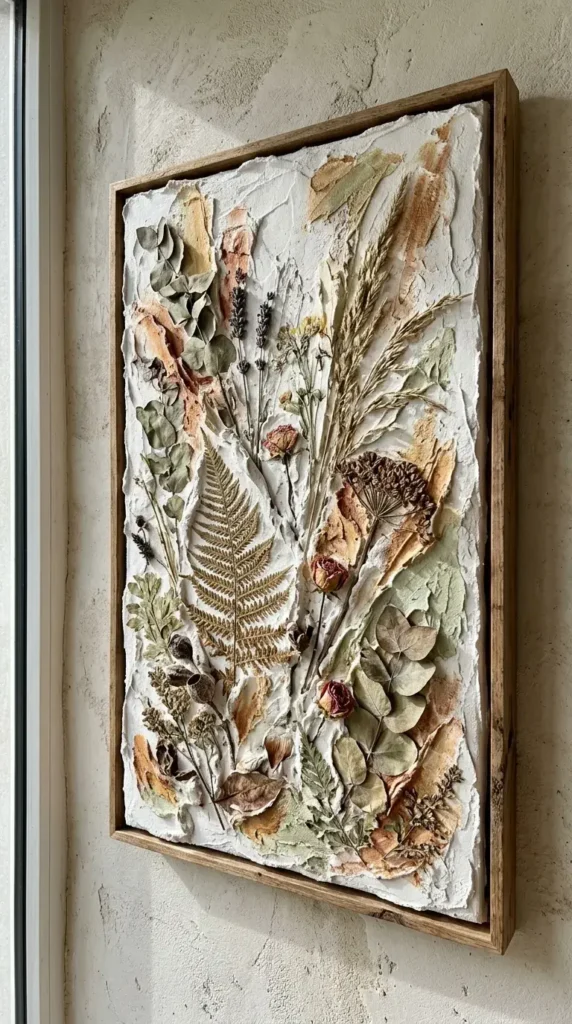
12. Abstract Pressed Floral Relief
Moving away from flat planes, this sculptural approach incorporates actual dried organic elements embedded directly into thick, plaster-like paint.
- Materials Needed: Plaster of Paris or heavy texture paste, dried baby’s breath or pressed petals, acrylic paints in soft earth tones, palette knife.
- How to Make It:
- Spread a thick, 1/4-inch layer of plaster across your canvas board.
- Press real dried botanicals and stems directly into the wet plaster, arranging them into an abstract bouquet.
- Once the plaster hardens completely, dry-brush soft washes of earth tones and gold over the raised surfaces to highlight the textures.
- Tips and Variations: Seal the entire cured plaster piece with a clear UV-resistant varnish to preserve the organic materials from yellowing over time.
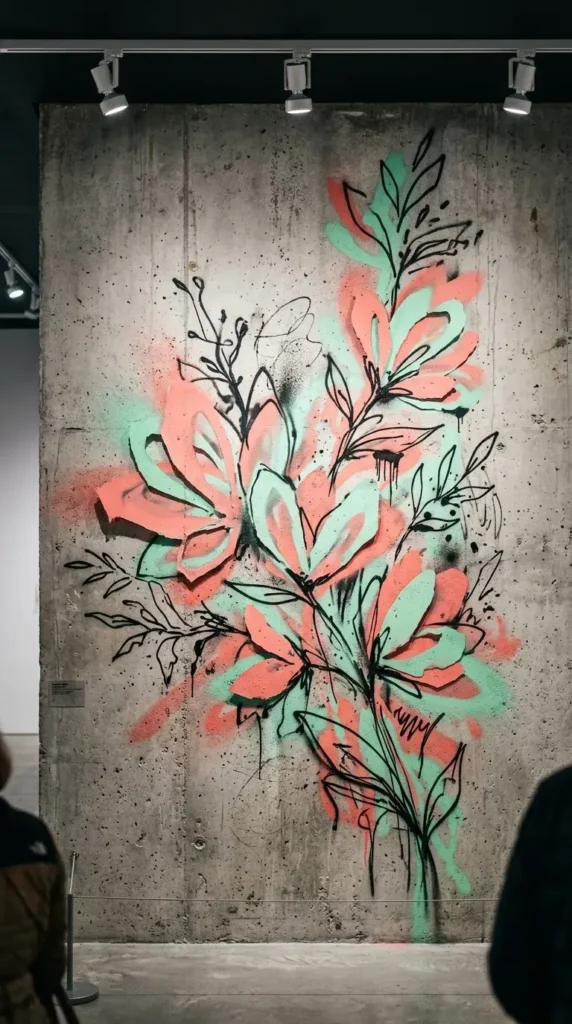
13. Stencil & Spray Abstract Layering
Industrial meets organic in this street-art-inspired floral piece that utilizes custom hand-cut stencils and aerosol or high-flow acrylic sprays.
- Materials Needed: Heavy cardstock, craft knife, matte spray paint or airbrush inks in coral and mint, stippling brush.
- How to Make It:
- Cut abstract, organic petal shapes out of cardstock to create quick, DIY stencils.
- Layer the stencils randomly across a textured canvas and mist lightly with coral and mint spray paint.
- Remove stencils and hand-paint jagged, sketchy stems connecting the floating geometric petal prints.
- Tips and Variations: Keep your stencils simple; abstract shapes work much better than intricate botanical outlines when combined with spray effects.
14. Geometric Floral Fusion
This style bridges the gap between rigid geometric abstraction and free-flowing floral fluidity, creating a balanced, highly architectural composition.
- Materials Needed: Painter’s tape, geometric stencils, gold leaf pen, fluid acrylics in pastel pink and navy blue, fine liner brush.
- How to Make It:
- Use painter’s tape to section off sharp geometric triangles and lines across the canvas. Fill select sections with solid navy blue.
- Remove the tape once dry, then paint wild, loose, organic floral arrangements that break across and spill over the rigid geometric boundaries.
- Outline the geometric shapes with a gold leaf pen to create crisp divisions.
- Tips and Variations: Stick to a tight three-color palette to prevent the geometric elements from looking overly chaotic or cluttered.



15. Shimmering Metallic Gold & Blush Blossoms